If you have been searching for affordable cosmetology schools in Chicago, you have probably noticed that non-accredited programs often list a lower price. That lower number feels like the smart choice when you are working with a tight tuition budget, but the sticker price does not tell the full story.
Accreditation status changes whether you can access federal financial aid and whether your diploma actually lets you sit for the state licensing exam, so the school that looks cheaper on day one can end up costing far more by graduation.
Accredited schools cost more upfront but protect your financial aid eligibility and your ability to sit for the state licensing exam. Non-accredited schools save you money now but can create expensive problems later.
In this article, you’ll learn how accreditation affects financial aid, licensing eligibility, and long-term career opportunities so you can confidently choose the right cosmetology school in Chicago.
Quick Comparison: Accredited vs Non-Accredited Cosmetology Schools
Accreditation status changes almost every part of your enrollment experience, from paperwork to career outcomes.
| Factor | Accredited School | Non-Accredited School |
| Federal financial aid (FAFSA) | Eligible | Not eligible |
| Illinois State Cosmetology License exam | Graduates qualify to sit for it | May not qualify |
| Recognized accrediting body | NACCAS-approved | No recognized accreditation |
| Graduation outcome tracking | Reported and verifiable | Rarely disclosed |
| Curriculum hour requirements | Meets the 1,500-hour state mandate | Varies, often unverified |
Among the schools that market themselves as affordable cosmetology schools in Chicago, the ones worth shortlisting are the ones that can prove accreditation, not just a low price.
What Accredited Schools Like Rosel School of Cosmetology Do Best
Accredited or affordable cosmetology schools in Chicago give you a documented path from enrollment to licensure, backed by financial aid access and measurable graduation outcomes.
1. NACCAS Accreditation and What It Actually Verifies
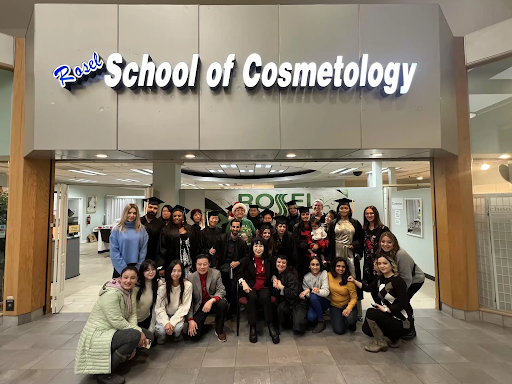
Rosel School of Cosmetology has held accreditation from NACCAS for more than 35 years since opening in 1989.
NACCAS, the National Accrediting Commission of Career Arts and Sciences, is recognized by the U.S. Department of Education as a national accrediting agency for postsecondary career schools, according to NACCAS’s official overview.
Accreditation confirms that a school’s curriculum, facilities, and outcomes meet standards reviewed on an ongoing basis, not just at opening. Rosel is also approved by the Illinois Department of Financial and Professional Regulation, adding a second layer of state-level oversight beyond NACCAS review.
This distinction matters more than most prospective students realize, and it usually only surfaces at the point of applying for aid or scheduling the state exam, well after tuition has already been paid.
A school can advertise itself among the affordable cosmetology schools in Chicago and still lack the accreditation needed to back that affordability with real financial support. Rosel’s accreditation means its affordability is supported by access to federal financial aid, not just lower upfront costs.
2. Financial Aid Access Tied to Accreditation
Accreditation status determines whether you can apply for federal financial aid at all.
A school must be accredited before it can participate in Title IV programs, which cover Pell Grants and federal student loans, according to the Federal Student Aid Handbook on institutional eligibility.
Without accreditation, this door closes entirely, regardless of how strong your grades or portfolio look going into enrollment.
Rosel’s NACCAS status keeps that door open for eligible students, which is often the single biggest factor separating genuinely affordable options from schools that only look affordable on paper.
3. Graduation Rate and Licensure Readiness
Rosel School of Cosmetology offers a state-approved curriculum designed to prepare students for the Illinois licensing process. Completing training at an accredited school helps students meet the educational requirements needed to pursue licensure.
A high graduation rate signals a program built to get you across the finish line, not just enrolled at the start, and it directly supports the value case for choosing Rosel among other affordable cosmetology schools in Chicago.
What Non-Accredited Schools Offer
Non-accredited affordable cosmetology schools in Chicago typically advertise shorter enrollment timelines and lower upfront tuition. Some offer flexible scheduling or informal skill-building classes aimed at hobbyists rather than licensure candidates.
These programs do not go through NACCAS review, so their curriculum hours and quality standards are not independently verified by any outside body.
Students who choose this route usually pay less at signup but take on the risk of a diploma that state licensing boards may not recognize once it is time to apply for the exam.
The Key Differences That Matter
TL;DR: The real cost difference between accredited and non-accredited affordable cosmetology schools in Chicago shows up after enrollment, not before it.
Financial Aid Risk: The Price Is Lower, But That Comes at a Cost
Non-accredited schools often have lower listed tuition, and that savings looks attractive on a budget spreadsheet. That lower price usually means no access to FAFSA, Pell Grants, or federal loans, so you pay the full amount out of pocket with no aid cushion if your finances change mid-program.
What looks like the more affordable option upfront can end up being the more expensive one by the time you factor in lost aid.
Licensure Delay Risk: The Gap Most Schools Do Not Address
One important point many comparisons overlook is what a non-accredited diploma can mean when it’s time to apply for licensure.
Illinois requires 1,500 clock hours of instruction at an approved cosmetology school before you become eligible for licensure, according to the Illinois Department of Financial and Professional Regulation.
Graduate from a non-accredited program, and you may need to repeat coursework at an accredited school before the state will even let you test.
That means paying tuition twice, which erases any savings the lower-cost option offered, and delaying your first paycheck as a licensed professional by months, sometimes longer.
The exact delay depends on how many of your original hours the accredited school agrees to count, so this outcome varies case by case rather than following one fixed timeline.
Which Option Is Best for You?
Accredited school (Rosel School of Cosmetology): Best for aspiring cosmetologists and skincare specialists in the Chicago metro area who want FAFSA eligibility, accredited training, and a clear path to the Illinois State Cosmetology License exam.
Non-accredited program: Best for hobbyists exploring basic beauty skills with no plan to seek state licensure or use federal financial aid.
Frequently Asked Questions
Q1. Can I get financial aid at a non-accredited cosmetology school in Chicago?
No. Federal financial aid programs, including FAFSA and Pell Grants, require enrollment at an accredited institution. A non-accredited cosmetology school does not qualify, so you would need to cover tuition entirely out of pocket, which changes the real cost comparison significantly.
Q2. Will a non-accredited cosmetology diploma let me take the Illinois state exam?
It depends on the program. Many non-accredited diplomas do not meet the state’s 1,500-hour training requirement, so you may need to complete additional accredited coursework before the Illinois licensing board allows you to sit for the exam, which adds both time and cost to your original plan.
Q3. How long has Rosel School of Cosmetology been NACCAS accredited?
Rosel School of Cosmetology has held NACCAS accreditation for more than 35 years, since the school opened in 1989. That accreditation is reviewed and maintained on an ongoing basis by the National Accrediting Commission of Career Arts and Sciences, not granted once and left unchecked.
Q4. Are all affordable cosmetology schools in Chicago accredited?
No. Price alone does not indicate accreditation status. Always confirm NACCAS accreditation directly before enrolling, since a lower price with no accreditation can end up costing more in lost financial aid and delayed licensure.
Start Your Accredited Path Today
Choosing a non-accredited school might save you money on day one, but the long-term cost shows up in blocked financial aid and delayed licensure.
An accredited affordable cosmetology school in Chicago protects both your budget and your career timeline, which matters more over four years than the difference in tuition on your first invoice.
Rosel School of Cosmetology offers NACCAS-accredited training in the Chicago metro area, backed by more than 35 years of experience, NACCAS accreditation, and state-approved programs that prepare students for Illinois licensure.
Enroll today to start a training path that keeps your financial aid options open and your licensing timeline on track.