When you search for accredited beauty schools in Chicago, you find dozens of results. Every school claims it will launch your career. But if you do not know what accreditation means for your license, your financial aid, and your career timeline, you are making one of the biggest decisions of your life without the right information.
This article gives you what you need to compare options and enroll with confidence.
Choosing between accredited beauty schools and non-accredited schools is not just a quality question. It determines whether your training hours count toward your Illinois cosmetology license and whether you can access federal financial aid.
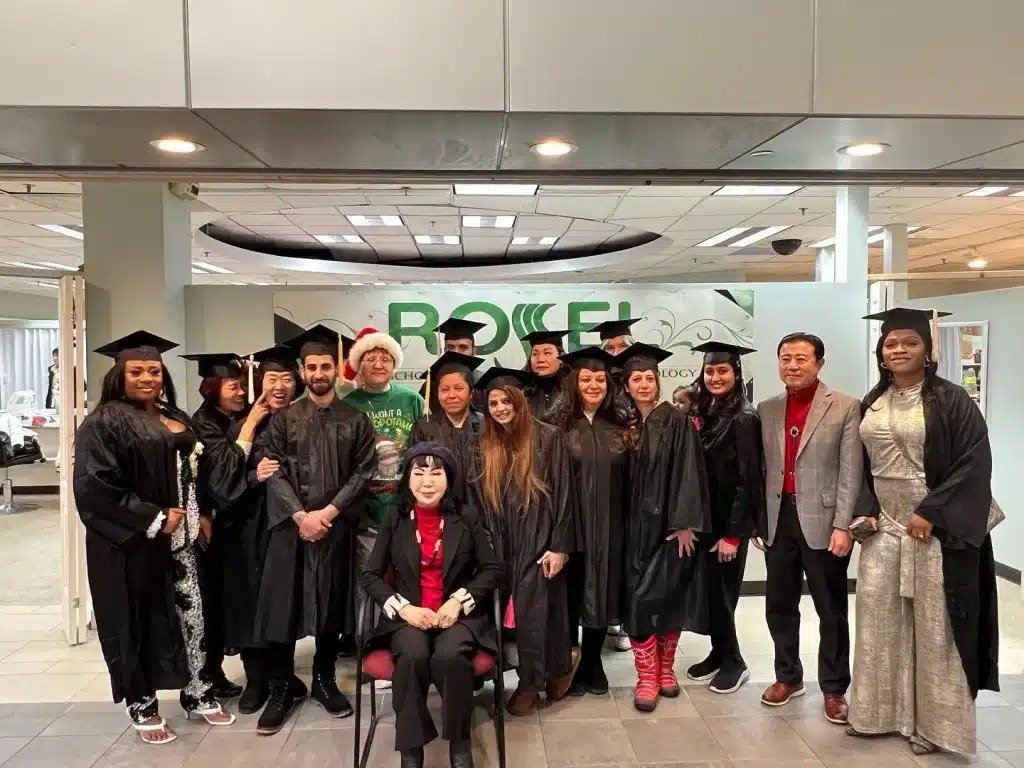
What Accredited Beauty Schools Actually Mean for Your Illinois License
Accredited beauty schools meet state approval standards that non-accredited schools do not. That difference determines whether your training hours count toward the Illinois cosmetology license exam. Before you compare tuition or commute times, this factor must come first.
1. The Illinois Licensing Requirement You Cannot Work Around
Illinois has a clear, non-negotiable threshold for cosmetology licensure.
According to the Illinois Department of Financial and Professional Regulation’s Cosmetologist (011): Qualifications for Licensure (effective March 2025, revised September 2025), applicants must “complete 1500 clock hours of instruction of a cosmetology curriculum from a licensed cosmetology school that is approved by the Department.”
The same document requires applicants to “submit an official transcript from a licensed cosmetology school showing graduation from a program with 1500 clock hours.”
That language leaves no room for interpretation. A student who trains at a school that is not IDFPR-approved cannot submit a qualifying transcript and cannot sit for the Illinois state cosmetology exam, regardless of how many hours they complete.
Accreditation provides educational and financial aid benefits, while IDFPR approval is the requirement that allows training hours to qualify toward Illinois licensure.
2. How Accreditation Controls Your Financial Aid Access
The financial consequence of choosing a non-accredited school is just as serious.
The U.S. Department of Education’s Federal Student Aid Eligibility for Federal Student Aid infographic (January 2024) confirms that to qualify for federal aid, students must be “enrolled or accepted for enrollment as a regular student in an eligible degree or certificate program.”
Non-accredited schools are not eligible program providers, which means students enrolled there cannot access FAFSA, Federal Pell Grants, or federal loans.
The gap this creates is significant. According to the U.S. Department of Education’s Federal Student Aid article Don’t Miss Out on Federal Pell Grants, “for the 2026–27 award year, the maximum Pell Grant award is $7,395.”
At Rosel School of Cosmetology, the confirmed net annual price is approximately $7,356. An eligible student enrolling at a NACCAS-accredited school may cover the full cost of annual tuition through grant funding alone. That financial path simply does not exist at a non-accredited school.
Accredited vs. Non-Accredited Beauty Schools: The Three Risks Chicago Students Miss
Most Chicago students researching accredited beauty schools compare tuition and location. Three deeper risks determine whether your training leads to a license or starts over from scratch. This is the decision map that Chicago students actually need.
The right question is not “which school is cheapest?” The real question is, which school protects your investment, your timeline, and your financial aid eligibility from day one?
| Criteria | Accredited Beauty School | Non-Accredited Beauty School |
| Illinois licensing eligibility | Qualifies: IDFPR-approved hours accepted toward state exam | Does not qualify: hours may not be accepted |
| Federal financial aid (FAFSA / Pell Grant) | Eligible: Pell Grants and federal loans accessible | Not eligible: federal aid unavailable |
| External outcome accountability | NACCAS monitors graduation rates and program outcomes | No external oversight required |
| Career timeline risk | Clear path to state exam and licensure | Hours may need to be fully repeated at an approved school |
3. Three Risks to Verify Before You Enroll in Any Chicago Beauty School
Run this check for every school you consider before submitting an application:
- Licensing risk: Confirm the school holds active IDFPR approval. Without it, every hour you complete may not satisfy the Illinois state cosmetology licensing requirement.
- Financial aid risk: Confirm the school holds NACCAS accreditation or equivalent national accreditation recognized for Title IV eligibility. Without it, FAFSA, Pell Grants, and federal loans are off the table.
- Career timeline risk: Confirm that accreditation is currently active, not lapsed or under review. A school that loses approved status mid-enrollment may require you to repeat all completed hours at a qualifying school before you can sit for the exam.
These three checks take minutes. Skipping them can cost months of lost time and thousands of dollars that cannot be recovered.
How Rosel School of Cosmetology Serves Accredited Beauty School Students in Chicago
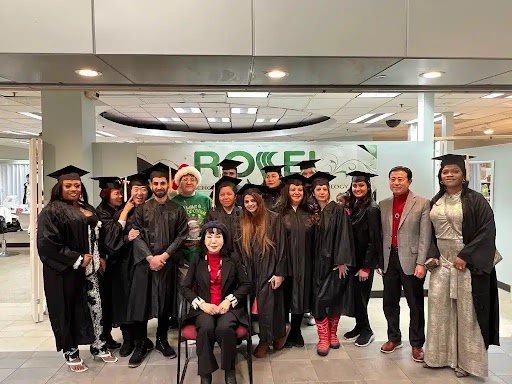
Rosel School of Cosmetology holds active NACCAS accreditation and active IDFPR approval, helping students meet Illinois licensing requirements through approved training programs.
For career-focused students who want a clear, supported path to licensure in the Chicago metro area, those credentials and outcomes are the standard to measure every other school against.
1. Active NACCAS Accreditation, IDFPR Approval, and Over 30 Years in the Chicago Market
Rosel School of Cosmetology is accredited by NACCAS (National Accrediting Commission of Career Arts & Sciences), the leading accrediting body for career beauty schools in the United States, with that accreditation currently active.
The school holds active approval from the Illinois Department of Financial and Professional Regulations, confirming that its cosmetology program satisfies the state’s 1,500-hour requirement. Rosel is also approved by the Department of Homeland Security to enroll non-immigrant alien students.
Operating from its location at 307 Golf Mill Center, Niles, Illinois, since 1989, Rosel School of Cosmetology has served Chicago-area career students for over 30 years. Every one of those credentials is verified and on record with its issuing body.
2. Four Programs, All Hair Types, All Skin Types, and Modern Techniques
Rosel School of Cosmetology, an accredited beauty school, offers four career programs, each built for professional outcomes:
- Cosmetology: 1,500 hours covering hair, skin, nails, makeup artistry, hair coloring, and sanitation. The most comprehensive career path and the preferred enrollment for long-term professional range.
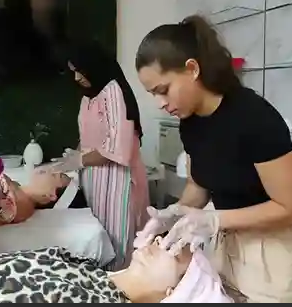
- Esthetics: advanced modern skincare, including exfoliation and lasering, reflecting current industry demand, not foundational-only techniques.
- Nail Technology: a focused 350-hour diploma program with a direct career entry point.
- Instructor Training: for licensed professionals transitioning into teaching roles at accredited cosmetology schools.
Every program covers all hair styles and all skin types, preparing graduates for the full range of clients in the Chicago market.
Frequently Asked Questions
1. Does attending a non-accredited beauty school qualify me for the Illinois cosmetology license?
No. The Illinois Department of Financial and Professional Regulation (IDFPR) requires cosmetology applicants to complete 1,500 clock hours at an IDFPR-approved cosmetology school and submit proof of graduation. Hours earned at non-approved schools do not qualify for Illinois licensure. (DFPR, Cosmetologist (011): Qualifications for Licensure, effective March 2025)
2. Can I get federal financial aid at a non-accredited beauty school in Chicago?\
No. Federal student aid eligibility requires enrollment in an “eligible degree or certificate program” at a qualifying institution. Non-accredited schools do not qualify. Students there cannot access FAFSA, Pell Grants, or federal loans, meaning tuition must be paid out of pocket. (U.S. Department of Education, Federal Student Aid: Eligibility for Federal Student Aid, January 2024)
3. What does NACCAS accreditation mean when comparing beauty schools in Chicago?
NACCAS, the National Accrediting Commission of Career Arts & Sciences, is the primary accrediting body for career beauty schools in the United States.
Active NACCAS accreditation confirms independently reviewed curriculum standards, enables FAFSA eligibility, and signals accountability that non-accredited schools are not required to demonstrate.
4. How do I verify that a Chicago beauty school currently holds IDFPR approval?
Visit the IDFPR public license lookup at idfpr.illinois.gov and search for the school by name. Confirm the status shows as active. Ask the school directly for its NACCAS accreditation certificate; any genuinely accredited school provides that documentation without hesitation.
Your Next Step Starts With the Right School
Accredited beauty schools give you a clear path to licensure, financial aid, and a career that begins on solid ground. A school that cannot show active IDFPR approval, current NACCAS accreditation, and a verifiable graduation rate puts your tuition, time, and career timeline at risk. Run those three checks before you commit.
Schedule your visit to Rosel School of Cosmetology today and speak with an admissions advisor about NACCAS-accredited programs in cosmetology, esthetics, nail technology, and instructor training. Located at 307 Golf Mill Center, Niles, IL 60714.